Curiosity Leads
A question, texture, sound, shape, or surprising result can hold attention longer than a formal instruction. Curiosity gives learning a personal reason to continue.
A GrowWise Family Learning Guide
Children learn deeply when curiosity, movement, conversation, and imagination work together. Purposeful play turns everyday moments into opportunities to practice language, build confidence, solve problems, understand emotions, and strengthen family connection.
This guide helps families create a balanced approach to screen-free learning with alphabet toys, counting activities, science experiments, puzzles, creative kits, emotional-learning cards, family conversation tools, chore charts, and hands-on busy boards.
The Foundation
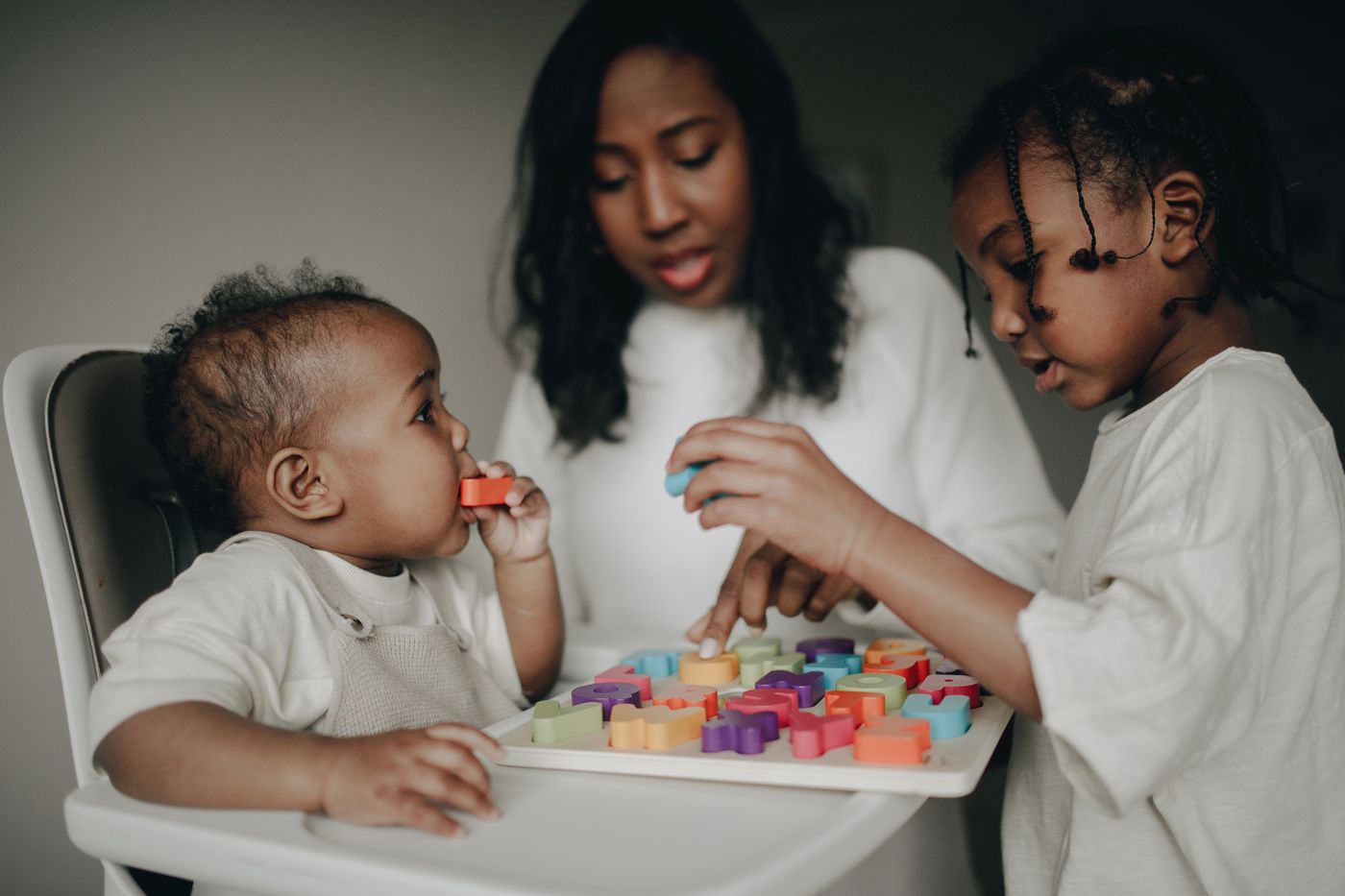
Play is not separate from learning. It is one of the most natural ways children organize information, test ideas, develop independence, and make sense of relationships, routines, language, and the physical world.
A question, texture, sound, shape, or surprising result can hold attention longer than a formal instruction. Curiosity gives learning a personal reason to continue.
Children often repeat the same action because each attempt improves control, prediction, memory, and confidence. Repetition is productive when the child remains engaged.
A responsive adult can turn a simple activity into a meaningful exchange by noticing effort, asking open questions, and allowing enough time for the child to respond.
Small choices help children feel capable. Choosing a puzzle, color, card, tool, or next step can increase participation without placing the entire activity on the child.
Whole-Child Growth
One play experience can support several areas of development at the same time. A child completing a puzzle may also be practicing patience, visual memory, hand control, flexible thinking, and language used to describe position.
Naming, describing, storytelling, letter recognition, listening, turn-taking, and using new words in meaningful situations.
Counting, sorting, comparing, matching, sequencing, recognizing quantities, exploring patterns, and using positional language.
Grasping, pinching, pressing, threading, fastening, drawing, fitting pieces, and coordinating both hands during purposeful tasks.
Identifying feelings, recognizing social cues, developing empathy, managing frustration, and expressing needs with greater clarity.
Planning, testing, observing, adjusting, persisting through difficulty, and learning that an unsuccessful attempt can provide useful information.
Imagining possibilities, combining materials, making visual choices, inventing stories, and creating more than one answer to an open-ended task.
GrowWise Play Map
Start with the kind of experience that naturally attracts your child. The most useful learning tool is not always the most advanced one; it is the one that invites active participation at the child’s current stage.
Support letter recognition, beginning sounds, word building, tracing, and early reading confidence through tactile, visible, repeatable play.
Make quantities easier to understand by giving children objects they can move, group, compare, count, and arrange into simple patterns.
Encourage observation, prediction, cause-and-effect thinking, and careful investigation through guided experiments with visible results.
Build visual discrimination, spatial reasoning, memory, patience, and the ability to break a larger challenge into manageable parts.
Give children a structured starting point while leaving room for color choices, personal ideas, experimentation, and proudly completed work.
Help children notice facial expressions, name feelings, discuss experiences, and develop language for emotional needs and social situations.
Create thoughtful moments for listening, storytelling, reflection, humor, values, memories, and age-appropriate discussions around the table.
Make routines visible and manageable while supporting responsibility, sequencing, consistency, cooperation, and positive family habits.
Invite repeated hands-on practice with fasteners, switches, textures, movements, and everyday actions that strengthen coordination and focus.
Support Without Taking Over
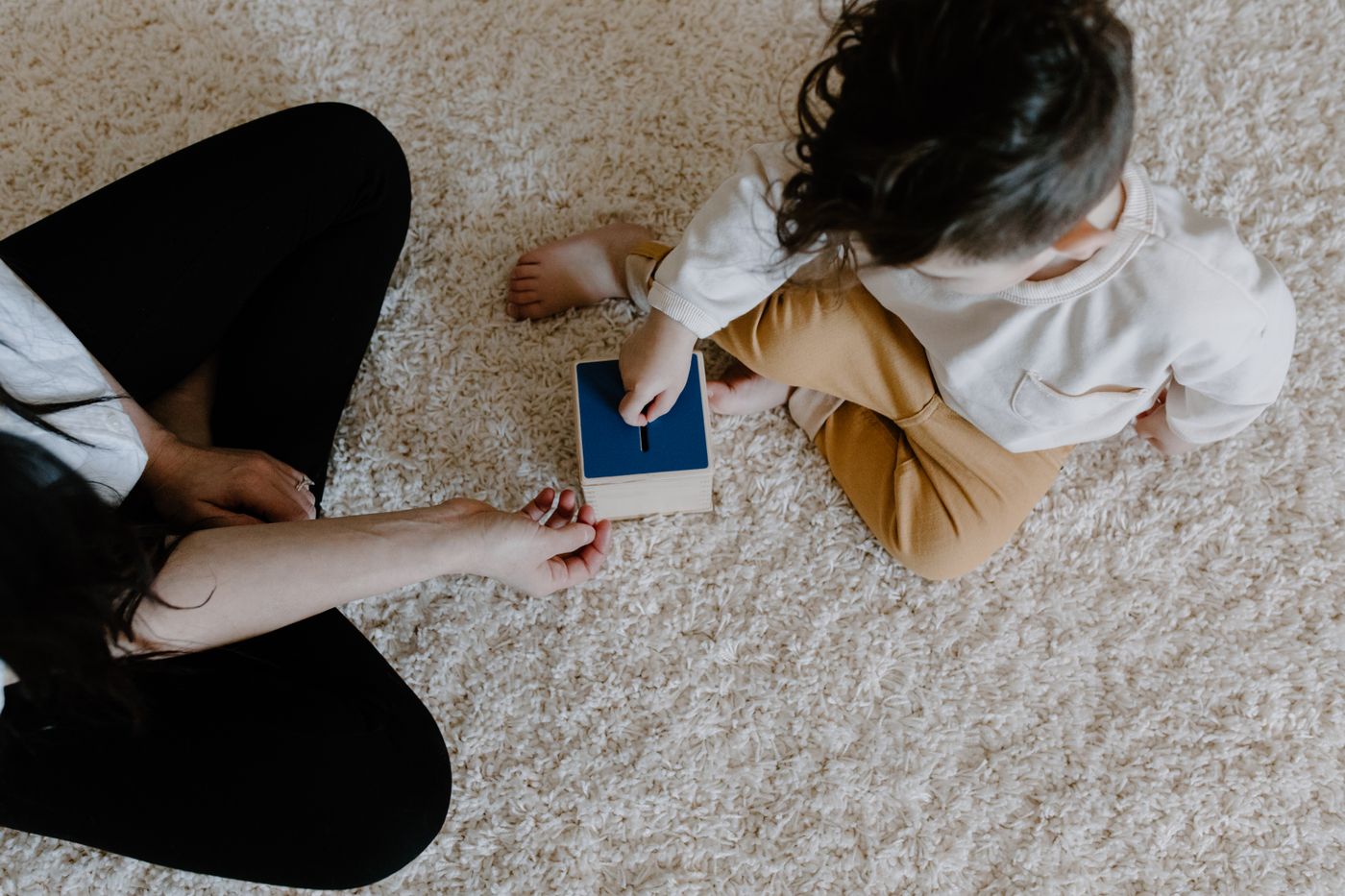
Meaningful play often follows a simple rhythm: the child notices something, begins to explore, meets a manageable challenge, and adjusts through practice. An adult can protect that rhythm by staying available without directing every move.
A brief pause gives the child time to think, test an idea, and show what kind of support is actually needed.
Neutral observations such as “You turned the piece around” encourage reflection without judging the result.
A small prompt preserves ownership of the task better than demonstrating the entire solution.
Notice concentration, patience, creative thinking, and willingness to try again instead of praising speed alone.
Simple Family Routine
Learning does not require a long lesson. Short, predictable invitations can fit naturally around breakfast, quiet time, family routines, and evening connection.
Invite one quick activity before the day becomes busy: match three letters, count breakfast items, or review a simple chore sequence.
Try asking: “Which one would you like to begin with?”Use a puzzle, busy board, counting set, or art material to create a short period of focused, screen-free practice.
Try asking: “What do you notice when you move it?”Make room for an experiment, a creative project, or a puzzle challenge that can continue across several days.
Try asking: “What do you think might happen next?”Use emotion cards or family conversation cards to revisit the day, share a feeling, or tell one small story.
Try asking: “What felt easy, tricky, or interesting today?”Practical Support
The goal is not to make every activity educational in an obvious way. The goal is to create a calm environment where attention, independence, communication, and discovery can grow naturally.
Rotate a small selection instead of displaying everything at once. Fewer choices can make it easier for children to begin and stay engaged.
Choose activities that feel achievable with a little effort. A useful challenge should invite persistence without creating constant frustration.
A defined tray, mat, table, or floor space helps organize materials and makes the beginning and end of an activity easier to understand.
Avoid moving to the next activity too quickly. Children may need many attempts before a new action feels familiar and satisfying.
Invite the child to return pieces, organize cards, or place tools in a container. Cleanup can support memory, sequencing, and responsibility.
Finding the Right Fit
Use the child’s current behavior as a clue. The same child may need active sensory practice on one day and a quiet conversation or puzzle on another.
Busy Boards, larger sorting activities, or an experiment with visible movement.
Add a clear physical task, then move toward a quieter matching or counting activity.
Jigsaw Puzzles, Alphabet Learning Toys, Counting Toys, or detailed crafts.
Protect concentration by limiting interruptions and allowing the child to finish at an individual pace.
Emotion Flash Cards, simple art materials, or a familiar sensory task.
Begin with calm observation and feeling words before asking for detailed explanations.
Family Conversation Cards, cooperative puzzles, Chore Charts, or shared crafts.
Focus on listening, teamwork, humor, and participation rather than competition or perfect answers.
Science Experiment Kits, counting investigations, or letter and word discovery.
Invite the child to predict first, test the idea, and describe what changed afterward.
The GrowWise Perspective
Our approach centers on warm family interaction, screen-free discovery, useful developmental practice, and products that support real moments in everyday homes.
Select products according to the child’s abilities, interests, developmental stage, and the manufacturer’s stated age guidance.
Encourage children to engage directly with materials, movement, family voices, visible results, and their own imagination.
Use play as a practical way to listen, cooperate, share ideas, build trust, and create warm memories around learning.
Give children opportunities to manipulate, test, build, arrange, fasten, draw, sort, and repeat meaningful actions.
Support confidence through manageable challenges where children can notice improvement through repetition and growing independence.
Choose learning tools that can fit naturally into home routines, quiet moments, family conversations, and repeated play sessions.
Helpful Answers
These answers offer a practical starting point for families. Product-specific age recommendations, supervision instructions, and safety information should always be reviewed before use.
The ideal length depends on age, interest, energy, and activity type. Several focused minutes can be valuable for a young child. Continue while the child remains meaningfully engaged, and end or pause when frustration, fatigue, or disinterest begins to replace curiosity.
Not usually. Many mistakes are part of productive exploration. Give the child time to notice and adjust independently. When support is needed, offer a small clue, describe what you observe, or ask a question that directs attention without immediately supplying the answer.
Look for an activity the child can begin independently but cannot complete instantly. A good fit usually includes familiar elements, one manageable challenge, and a clear way to make progress through practice. Reduce the number of pieces or steps when frustration remains high.
Shared play can work well when each child has an age-appropriate role. One child might sort while another counts, one might build while another tells a story, or an older child might explain a process. Always follow product age guidance and keep small components away from younger children.
Emotion cards provide a neutral visual starting point. Families can use them to name feelings, discuss facial expressions, connect emotions with personal experiences, explore possible responses, and build language that makes difficult conversations easier to begin.
Keep tasks specific, realistic, visible, and appropriate for the child’s stage. Introduce only a few responsibilities at first, practice the routine together, and acknowledge consistency and effort. A chore chart works best as a supportive family tool rather than a constant measure of perfection.
Review the complete instructions, age recommendation, included materials, required supervision, workspace needs, and cleanup directions before beginning. Encourage children to observe and predict, but maintain active adult oversight whenever the instructions require it.
Rotation can be based on attention rather than a fixed schedule. Keep favorite materials available long enough for mastery, store less-used items temporarily, and reintroduce them later with a new prompt or pairing. The goal is renewed curiosity, not constant novelty.
Shopping with GrowWise
A clear, dependable shopping experience gives families more time to focus on what matters: choosing meaningful tools and enjoying them together.
Our support channel is available around the clock for order and store assistance.
Every product is shipped free, with no minimum purchase requirement.
Orders are expected to arrive within three to five business days.
Eligible products may be returned or exchanged free within thirty days.
Keep Learning Together
Choose one activity, follow your child’s curiosity, and let the learning grow through conversation, repetition, creativity, and shared attention.