Free Shipping on Every ProductDelivery in 3–5 Business Days30-Day Free Returns
A GrowWise Development Guide
Sensory & Fine Motor Play
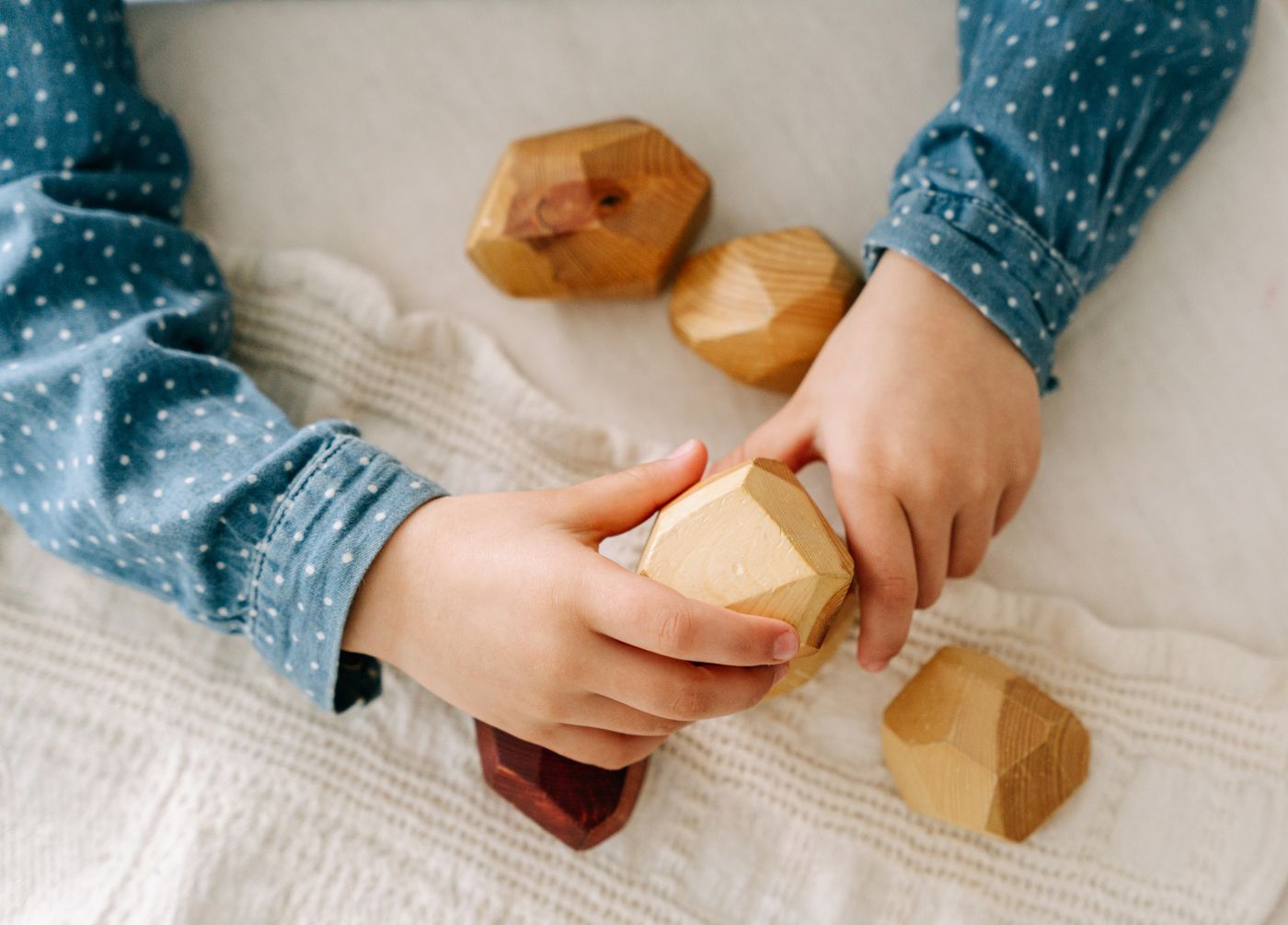
Small hands learn through real movement. Turning, pinching, pressing, threading, fitting, fastening, sorting, and building help children understand how their bodies work while developing confidence for everyday tasks.
Thoughtfully chosen sensory and fine motor activities create opportunities to explore texture, resistance, shape, movement, sound, coordination, focus, and cause and effect. The goal is not speed or perfection. The goal is meaningful, repeated practice that feels engaging and achievable.
Reach & GraspBuild control through purposeful hand movement.
Touch & NoticeExplore texture, shape, pressure, and resistance.
Practice & RepeatStrengthen skill through calm, familiar routines.
Hands-on play transforms simple movements into practice for coordination, independence, attention, and problem solving.
Tactile AwarenessNotice texture, temperature, pressure, edges, and surfaces.Hand StrengthPractice squeezing, pushing, pulling, grasping, and holding.Finger ControlRefine pinching, pointing, turning, fastening, and releasing.Visual MotorCoordinate what the eyes notice with what the hands do.Two-Hand WorkUse one hand to stabilize while the other completes a task.Calm AttentionStay engaged through predictable, repeated sensory actions.
Small Hands at Work
Movement Becomes Skill
Fine motor development is built from many connected actions. Children first notice an object, reach toward it, adjust their grip, move it with purpose, and gradually learn to control smaller and more precise movements.
01
Whole-Hand Grasp
Larger knobs, blocks, rings, handles, and puzzle pieces support early control by allowing the entire hand to participate in lifting, holding, and moving.
02
Pinch & Release
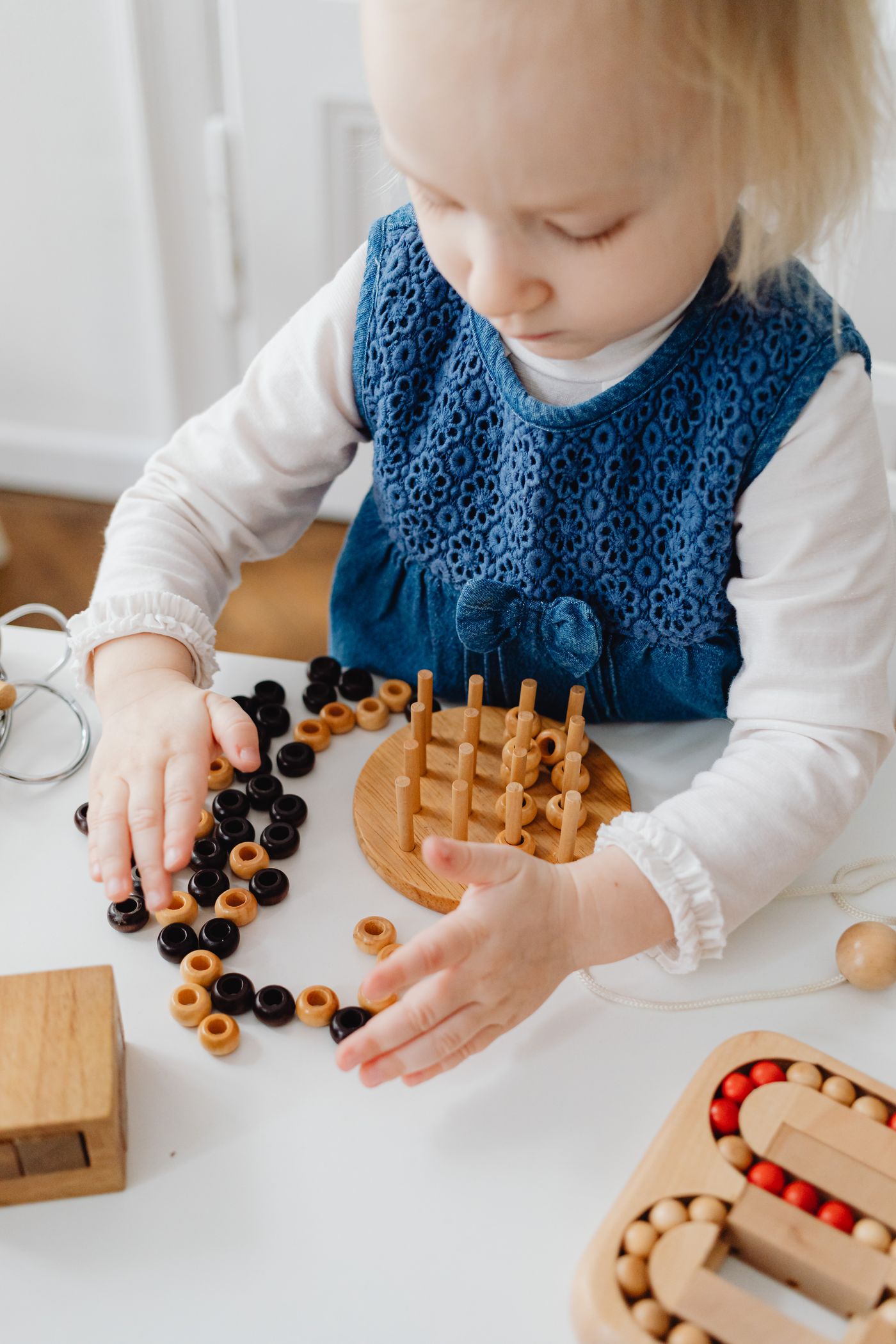
Beads, pegs, cards, small shapes, stickers, and fastening pieces invite the thumb and fingers to work together with growing precision.
03
Turn & Rotate
Dials, gears, puzzle pieces, lids, locks, and movable parts help children coordinate wrist rotation with visual planning.
04
Push & Pull
Switches, sliders, cords, drawers, levers, and fitted pieces develop hand strength while making cause and effect easy to observe.
05
Match & Place
Sorting, counting, letter matching, and puzzle work ask the eyes and hands to cooperate while children compare size, shape, direction, and position.
06
Plan & Complete
Multi-step crafts, chores, experiments, and construction activities help children remember sequences, organize materials, and finish with intention.
The GrowWise Play Atlas
Choose the Right Challenge
Different products invite different kinds of movement. Begin with the action your child is ready to practice, then adjust the number of pieces, complexity, time, and level of adult support.
Everyday Dexterity
Busy Boards
Busy boards bring familiar actions into one focused play space. Latches, switches, buckles, zippers, gears, cords, doors, buttons, and sliders invite children to repeat practical movements while exploring resistance and cause and effect.
FasteningTurningTwo-Hand WorkProblem Solving
Creative Control
Arts & Crafts Kits
Drawing, peeling, pressing, folding, threading, gluing, painting, and placing small materials help refine finger control while giving children visible ownership of the result.
PinchPressCreate
Visual Motor Focus
Jigsaw Puzzles
Puzzle play strengthens visual comparison, spatial planning, rotation, grasp-and-release control, and the ability to persist through a challenge without needing an immediate answer.
RotateFitFocus
Moveable Math
Counting Toys
Moving pieces one by one helps children connect physical action with quantity. Sorting, grouping, stacking, comparing, and arranging objects also support controlled release and hand-eye coordination.
SortGroupCount
Tactile Language
Alphabet Learning Toys
Letter pieces, tracing surfaces, matching boards, and word-building tools combine language practice with grasping, positioning, turning, and visual discrimination.
TraceMatchBuild
Hands-On Discovery
Science Experiment Kits
Pouring, measuring, squeezing, stirring, arranging, and observing give children purposeful reasons to control movement and follow a clear sequence.
PourMeasureObserve
Routine Practice
Chore Charts
Moving markers, attaching pieces, checking tasks, and organizing steps turn family routines into visible practice for sequencing and independence.
SequenceMoveComplete
Calm Connection
Emotion Flash Cards
Holding, sorting, matching, pointing to, and arranging emotion cards can combine gentle fine motor practice with language for feelings, facial expressions, body signals, and social experiences.
PointSortExpress
Shared Attention
Family Conversation Cards
Choosing, shuffling, holding, passing, and organizing cards creates a calm physical rhythm that can support listening, turn-taking, storytelling, and family connection.
ChoosePassConnect
A calm setup, a manageable challenge, and enough time to repeat can make detailed hand work feel satisfying rather than rushed.
Support Without Taking Over
Let the Hands Think
Children often understand a task through movement before they can explain it with words. A pause, a new grip, a rotated piece, or a second attempt may be part of the child’s thinking process. Adults can support that process without completing the challenge for them.
01
Pause Before Helping
Give the child enough time to inspect the material, test a movement, and decide whether another attempt is needed.
02
Describe the Action
Use clear language such as “You are turning the piece” or “Your other hand is holding the board steady.”
03
Reduce One Variable
Offer fewer pieces, a larger opening, a shorter sequence, or a more stable work surface when the challenge feels too complex.
04
Notice Useful Effort
Recognize concentration, careful hand placement, trying a new grip, completing one step, or returning after a short break.
05
Stop Before Fatigue
Short, positive practice can protect confidence and make it more likely that the child will return to the activity later.
Simple Play Invitations
Practice with Purpose
A useful play invitation does not need to be complicated. One clear action, one manageable challenge, and one thoughtful prompt can create a focused experience that children understand quickly.
01
Turn & Discover
Offer a puzzle piece, dial, gear, lid, or letter shape that needs to be rotated before it fits or reveals a result.
Ask: “What changes when you turn it a little?” 02
Pinch & Place
Invite the child to move small cards, pegs, counters, craft pieces, or stickers into a tray, line, pattern, or matching space.
Ask: “Which fingers help you hold that piece?” 03
Fasten & Release
Practice one buckle, zipper, button, latch, tie, or closure at a time before combining several actions on a busy board.
Ask: “What needs to happen before it opens?” 04
Sort & Compare
Use counting pieces, letters, cards, shapes, or craft materials to compare size, color, texture, quantity, or category.
Ask: “How did you decide where each one belongs?” 05
Build & Balance
Stack, connect, arrange, or combine pieces while noticing stability, direction, pressure, and how two hands can work together.
Ask: “What could make the base feel steadier?” 06
Create & Explain
Use an art kit, puzzle scene, letter set, or conversation card as a starting point for making and then describing an original idea.
Ask: “Which part would you like to tell me about?”
A Calmer Home Setup
Build an Activity Shelf
A simple, organized shelf makes it easier for children to see available choices, begin independently, use materials with care, and participate in returning each activity when play is complete.
Create a Clear Play Rotation
Choose Four to Six Activities
Include a mix of familiar practice, one current challenge, one creative option, and one calm activity for conversation or reflection.
Give Every Item a Home
Use a tray, basket, folder, container, or clearly defined space so the child can understand what belongs together.
Keep the Setup Visually Simple
Too many loose materials can make beginning difficult. Present only what is needed for the current version of the activity.
Rotate Based on Interest
Keep favorites available long enough for mastery. Store activities that are being ignored, then reintroduce them later with a new prompt.
Invite Child-Led Cleanup
Returning pieces, stacking cards, replacing tools, and carrying a tray can become part of fine motor practice and growing responsibility.
Choose by the Moment
Match Play to Need
Observe how the child approaches the day. Energy, attention, confidence, and emotional state can help you decide whether to offer movement, detailed hand work, creative exploration, or a calm shared activity.
What You Notice
A Helpful Direction
How to Adjust the Experience
Seeking Movement
Busy Boards, standing crafts, larger sorting activities, or experiments with visible physical action.
Begin with pushing, pulling, reaching, or carrying before transitioning to more detailed seated work.
Protect the work area from interruptions and allow enough time for the child to complete a self-selected stopping point.
Feeling Hesitant
A familiar puzzle, simple busy-board action, matching task, or repeated step from a known routine.
Start with something the child can complete successfully, then add one small challenge after confidence returns.
Feeling Frustrated
Emotion Flash Cards, soft art materials, a simple sorting activity, or a calm two-hand task.
Reduce the number of pieces, slow the pace, name the feeling, and offer one clear next step instead of several instructions.
Seeking Connection
Family Conversation Cards, a cooperative puzzle, a shared craft, or a chore-chart routine completed together.
Sit nearby, take turns, describe actions, and allow conversation to grow naturally from the shared materials.
Thoughtful Adult Support
Protect the Play Space
A strong sensory and fine motor experience combines a suitable challenge with careful preparation, age-aware supervision, enough working space, and respect for the child’s individual pace and sensory preferences.
Review Before Play
Read the product instructions, age recommendation, included-parts list, supervision guidance, and any setup or maintenance directions.
Check Small Parts
Keep small components away from younger children and inspect movable pieces, fasteners, cords, tools, and connectors before each play session.
Prepare the Surface
Use a stable table, floor mat, tray, or washable work area that gives the child enough room to move pieces without unnecessary slipping or clutter.
Respect Sensory Limits
Allow children to pause, avoid a texture, reduce noise, wash their hands, or observe before participating. Comfort supports meaningful engagement.
Helpful Answers
Common Questions
Every child develops at an individual pace. These answers provide general guidance for creating supportive play experiences, while product-specific instructions and professional advice should always take priority when needed.
What is the difference between sensory play and fine motor play?
Sensory play focuses on how children notice and respond to information such as texture, pressure, sound, movement, temperature, shape, and resistance. Fine motor play focuses more specifically on controlled movement of the hands, fingers, and wrists. Many activities support both areas at the same time.
How long should a fine motor activity last?
The useful length depends on age, interest, difficulty, energy, and the type of task. A short period of focused participation may be enough. It is generally better to stop while the experience still feels positive than to continue after fatigue or frustration has taken over.
How can I make an activity easier without removing the challenge?
Reduce the number of pieces, begin with a larger item, stabilize the work surface, demonstrate only the first step, use a familiar material, or complete part of the sequence together. Keep one manageable challenge so the child still has an opportunity to think and practice.
What should I do when my child avoids a texture?
Avoid forcing direct contact. Let the child observe, use a tool, touch the material briefly, keep hands clean, or choose a different texture. Some children need additional time and control before they feel comfortable exploring unfamiliar sensory experiences.
Are busy boards useful beyond toddler play?
The usefulness of a busy board depends on its design, component size, complexity, and the child’s current abilities. Different fasteners, sequences, locks, gears, and practical-life actions may remain engaging when they continue to offer an appropriate challenge. Always follow the stated product age guidance.
How often should fine motor materials be rotated?
Rotate according to engagement rather than a strict calendar. Keep a favorite activity available long enough for repetition and mastery. Store items that are being ignored, then reintroduce them later with a new arrangement, question, or level of difficulty.
Should I correct the way my child holds every object?
Children often experiment with several grips while learning how an object works. When the grip is safe and functional, allow room for exploration. You can model another approach, offer a better-sized tool, or describe how your own fingers are positioned without turning every attempt into a correction.
How can siblings share sensory and fine motor activities?
Give each child an age-appropriate role. One child might sort while another counts, one might stabilize while another fastens, or an older child might read a prompt while a younger child selects a card. Keep small parts and advanced tools away from children for whom they are not suitable.
When should I seek additional developmental guidance?
Consider speaking with a qualified pediatric or developmental professional when you have ongoing concerns about movement, hand use, coordination, sensory responses, pain, regression, participation in daily tasks, or any other aspect of development. General play guidance is not a substitute for individualized professional evaluation.
Shopping with GrowWise
Family-Friendly Service
Clear support, dependable delivery, and flexible returns help families choose learning products with greater confidence and less unnecessary complexity.
Support
24/7 Customer Care
Our support channel is available around the clock for store and order assistance.
Shipping
Free on Every Product
All products include free shipping, with no minimum purchase requirement.
Delivery
3–5 Business Days
Orders are expected to arrive within three to five business days.
Returns
30-Day Free Returns
Eligible products may be returned or exchanged free within thirty days.
Grow Through Everyday Practice
Small Movements Build Confidence
Begin with one clear action, allow time for repetition, and let children discover how their hands, eyes, attention, and ideas can work together.